
I’ve passed the Professional Scrum Master I (PSM I) assessment. Which doesn’t mean that I started playing rugby again (yes, again… I had to learn playing rugby during my study at Nyenrode), but this is about Scrum as a software development framework. A way for teams to work together to develop a (software) product.
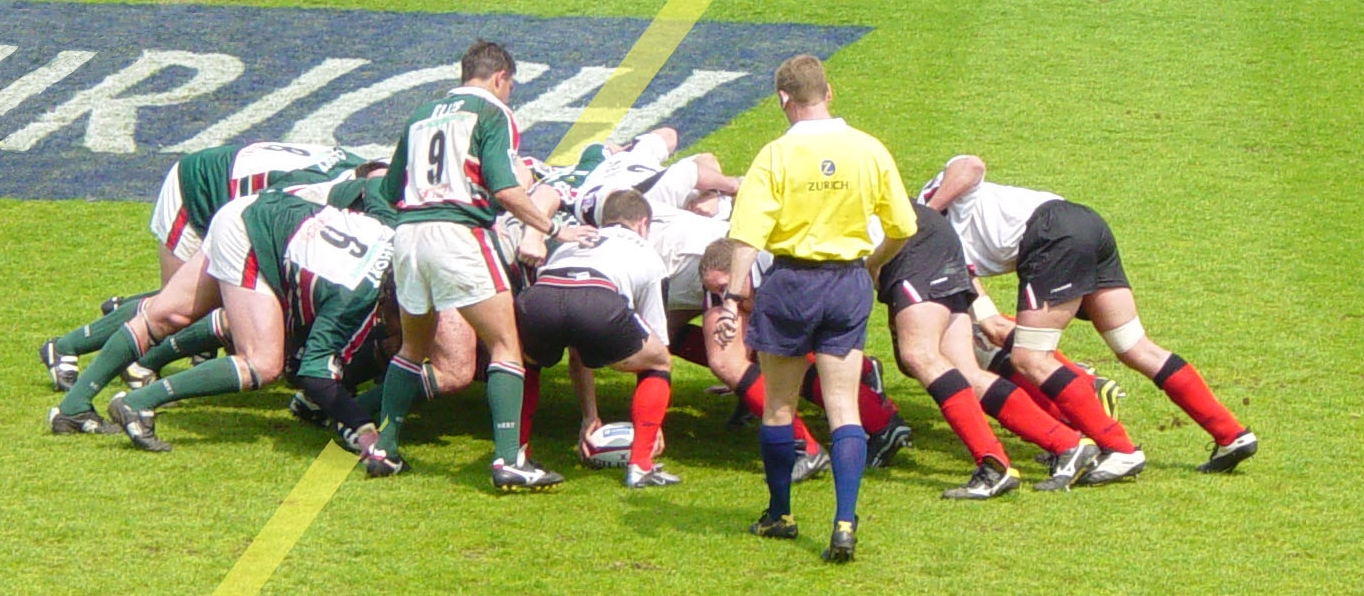 |
| Rugby Scrum [modified from Wikimedia Commons source; GNU FDL 1.2] |

In preparing for the assessment, I've found the official Scrum Guide invaluable together with the Glossary and the additional Definition of Done remarks. While the free Open Assessment is obviously one you should master before attempting the main exam (bonus: it is likely that you will recognize two or three similar/equal questions from the open assessment). Familiarity with Scrum and/or other Agile methods helps; and you should forget (at least temporarily) anything about PRINCE2 or other traditional Project Management terminology.
In order to visualize the Scrum process, I found Mark Hoogveld's Scrum Overview very useful. Which I found through Calvin's blog "Why scrum? Why agile development?" (also providing a good summary). Though I've redrawn and modified it slightly based on my understanding of the Scrum Guide, July 2013 edition, using the cycles from Scrum Process and (color modified) Persons; both from Wikimedia Commons (under CC BY-SA 3.0 and/or other licenses).


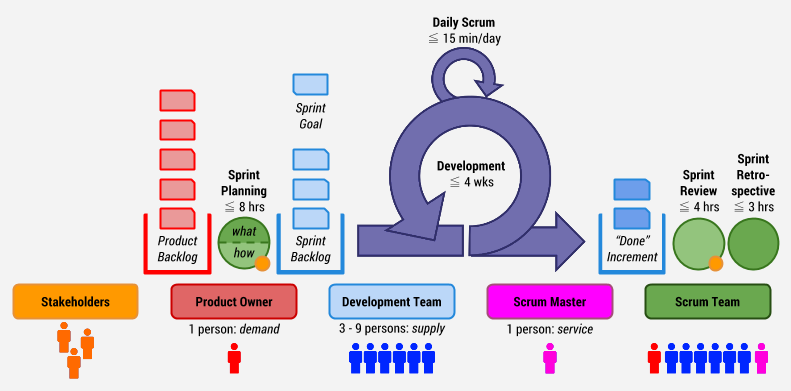 |
| Scrum Overview for 1 month Sprints |
 Though I didn't follow all the advise, Elvis Hsu's "Suggestions to pass the Professional Scrum Master I (PSM I) assessment" provides helpful insights, advise and links to prepare for the test.
At least when I took the actual test, it allowed me to bookmark questions and return to them later. I used this whenever I wasn't 100% sure about the answer. Allowing me to first go through all of the questions, then jump between the bookmarked ones to give them another read and consideration. Unfortunately, the Open Assessment doesn't provide this bookmark / review feature (yet).
I used about all the of the time granted, finishing with less than 2 minutes remaining of the 60 minutes total; though I probably stopped making changes in the last 10 minutes, but reviewing nevertheless.
Most of the assessment is based on the Scrum Guide / Glossary, though some are based on experience or having the Scrum / Agile mindset. You may also want to check the study guide and the forums for additional advise, pointers and other preparation materials.
Books
The following books may also help understand and apply Scrum:- Scrum - A Pocket Guide: 2013; Gunther Verheyen; 112 pages, English
- Scrum: 2014; Jeff Sutherland; 248 pages, English
- Agile Project Management with SCRUM: 2004; Ken Schwaber; 170 pages, English
- Scrum and XP from the Trenches: 2007; Henrik Kniberg; 140 pages, English - this is also available in a free online version.
- De Scrumgids (Juli 2013): 2013; Jeff Sutherland, Ken Schwaber - a free translation of the official Scrum Guide in Dutch; note that the PSM assessments are conducted in English
- Scrum: 2014; Jeff Sutherland; Dutch - translation of above mentioned Scrum book in Dutch
- De kracht van Scrum: 2010; Rini van Solingen, Eelco Rustenburg; 143 pages, Dutch
- Scrum voor managers: 2013; Rini van Solingen, Rob van Lanen; 160 pages, Dutch